CT motorcycle study set
Connecticut Road Signs and Signals Practice Questions
24 Connecticut motorcycle questions on road signs and signals, each with the correct answer and an explanation from the DMV handbook.
Road Signs and Signals questions
-
1. What should a rider do at a traffic signal that does not detect the motorcycle?
Answer: A — Position the bike over the detector loop
Many loop detectors respond better when the bike sits directly over the wire; a signal that never changes is treated as out of order.
-
2. What does this sign mean to a rider approaching it?
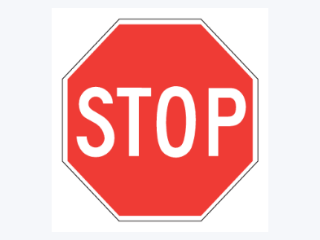
Answer: C — Come to a complete stop before proceeding
A STOP sign applies to a motorcycle exactly as it applies to any other vehicle.
-
3. What must a rider do where this sign is posted?
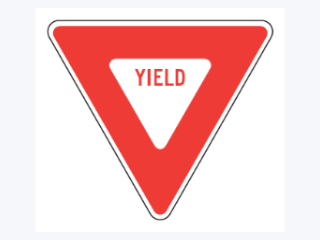
Answer: B — Slow and give way to traffic
A YIELD sign requires slowing and giving way, and a rider must be prepared to stop.
-
4. What surface hazard does this sign warn a rider about?
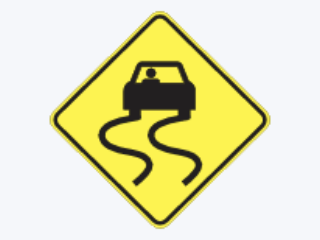
Answer: A — The road becomes slippery when wet
A two-wheeled vehicle depends entirely on tyre grip for balance, so a slippery surface is more consequential.
-
5. Why does this sign matter especially to a motorcyclist?
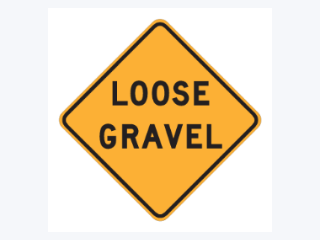
Answer: C — Loose gravel can cause a fall
Gravel reduces the traction a rider needs for both balance and braking.
-
6. What should a rider set their speed for after this sign?
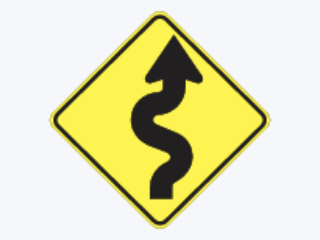
Answer: B — A series of curves ahead
Successive curves demand that speed be set before each one, with no chance to recover between them.
-
7. What hazard does this sign warn a rider about?
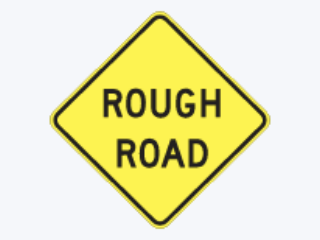
Answer: A — An uneven surface ahead
A rough surface unsettles a motorcycle far more than a car, so slow before reaching it.
-
8. What does this sign mean for a rider approaching the crossing?
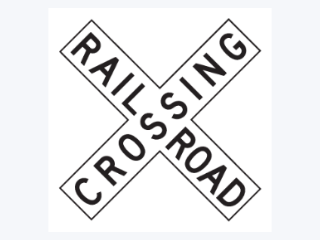
Answer: C — Yield and cross the rails near a right angle
A crossbuck requires yielding to trains, and rails at an angle are a specific hazard for a two-wheeled vehicle.
-
9. What does this sign warn a rider to prepare for?
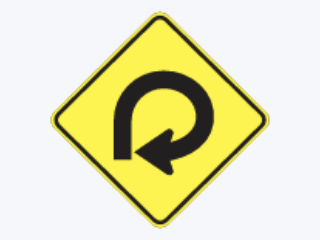
Answer: B — Traffic merging into their lane
Merging traffic may not see a motorcycle, so a rider should adjust position and speed early.
-
10. What does this pavement condition sign warn about?
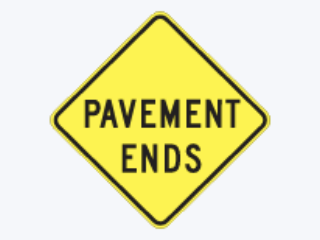
Answer: A — The paved surface ends
A change from pavement to gravel or dirt is a significant traction change for a motorcycle.
-
11. Why is the roadside unsafe for a rider where this sign is posted?
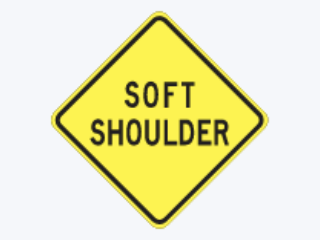
Answer: C — The shoulder is soft and unsafe to ride on
A soft shoulder will not support a motorcycle and can cause an immediate loss of control.
-
12. What should a rider begin preparing for at this sign?
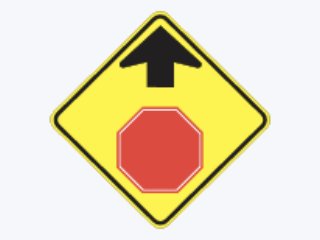
Answer: B — A stop sign ahead that may be obscured
Advance warning matters more on a motorcycle because braking should begin upright and early.
-
13. What should a rider expect after this sign?
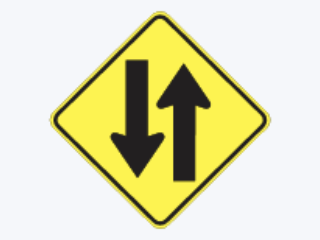
Answer: A — Traffic in both directions on the same roadway
Meeting oncoming traffic changes safe lane position and passing decisions.
-
14. Why is this sign significant for a rider?
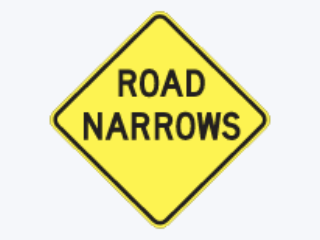
Answer: C — A narrowing road cuts the space cushion
Less lane width means fewer lane positions and less room to escape sideways.
-
15. What should a rider prepare for at this sign?
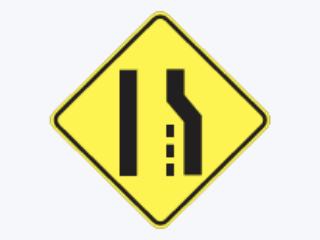
Answer: B — A lane ending, requiring an early merge
Merging early gives a rider room to pick a gap rather than being squeezed at the taper.
-
16. What does this sign warn a rider to expect?
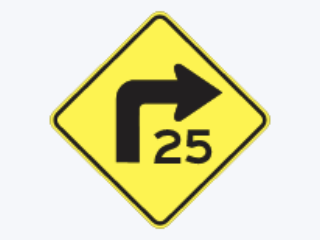
Answer: A — A sharp curve ahead
Entry speed for a curve must be set before the lean begins, so advance warning is used immediately.
-
17. Why does this sign matter more to a rider than to a car driver?
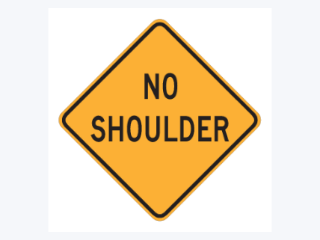
Answer: C — A broken shoulder offers no escape route
A motorcycle needs a firm surface to stop on, which a soft shoulder does not provide.
-
18. What does this work zone sign mean for a rider?
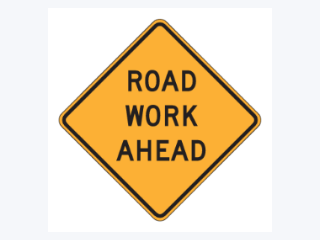
Answer: B — Expect uneven surfaces and loose material
Work zones combine several of the surface hazards that most affect a two-wheeled vehicle.
-
19. What does this sign tell a rider about the road ahead?
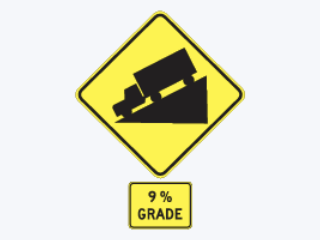
Answer: A — A steep grade to descend
Descending grades build speed quickly and demand braking done upright and early.
-
20. What is a rider forbidden to do in this zone?
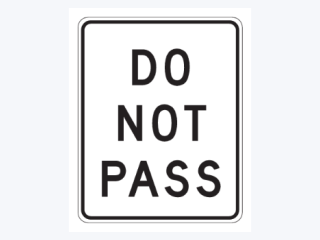
Answer: C — Do not pass in this zone
No-passing zones apply to motorcycles exactly as they do to cars.
-
21. Who should a rider expect in the road ahead?
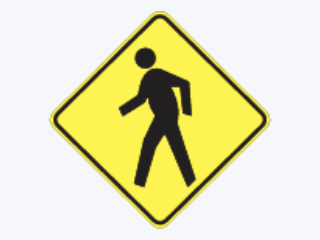
Answer: B — Pedestrians may be crossing ahead
A pedestrian crossing requires the same yielding duty from a rider as from any driver.
-
22. What does this sign mean for a rider planning a manoeuvre?
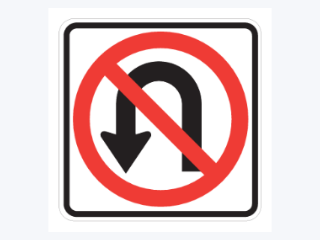
Answer: A — U-turns are prohibited here
Regulatory prohibitions apply to motorcycles the same as to other vehicles.
-
23. What should a rider do at this sign?
Answer: C — Yield to traffic already circulating
Traffic already circulating has the right of way, and a rider should be prepared to stop.
-
24. When must a Connecticut rider stop for a school bus with red lights flashing?
Answer: B — Whether it is on your side, the opposite side, or at an intersection ahead
Connecticut states the duty across all three situations.
Questions about this study set
How many road signs and signals questions are on this page?
24, each with the correct answer and an explanation drawn from Connecticut's motorcycle handbook.
Are these the real CT DMV questions?
No. These are practice questions written from the DMV handbook. They cover the same rules the official test draws on, but the wording is ours.
Where can I take a full Connecticut practice test?
The Connecticut state page lists full-length timed tests for every licence type and applicant path.